
Short answer: most restaurants in Dubai fail at marketing in 2026 because they hire a generalist agency instead of an F&B specialist, treat delivery platforms as a single channel instead of four, ignore Arabic content, buy media on flat schedules instead of around daypart peaks, chase vanity metrics instead of covers and delivery orders, and skip the hyperlocal cluster-specific work that Dubai's 14 F&B markets actually require. The long answer, with the twenty documented reasons in rank order, the solution framework for each, and the 90-day recovery playbook, is the rest of this article.
This piece is written for Dubai restaurant owners, operators, GMs, and investors who have already lived through at least one failed marketing engagement and want a framework for not repeating the loss. If you are considering your first agency hire, read it as a checklist. If you have fired three agencies in two years, read it as a diagnostic. Either way, by the end you will know what good looks like, what the five highest-leverage moves are, and the exact questions to ask the next agency before you sign anything.
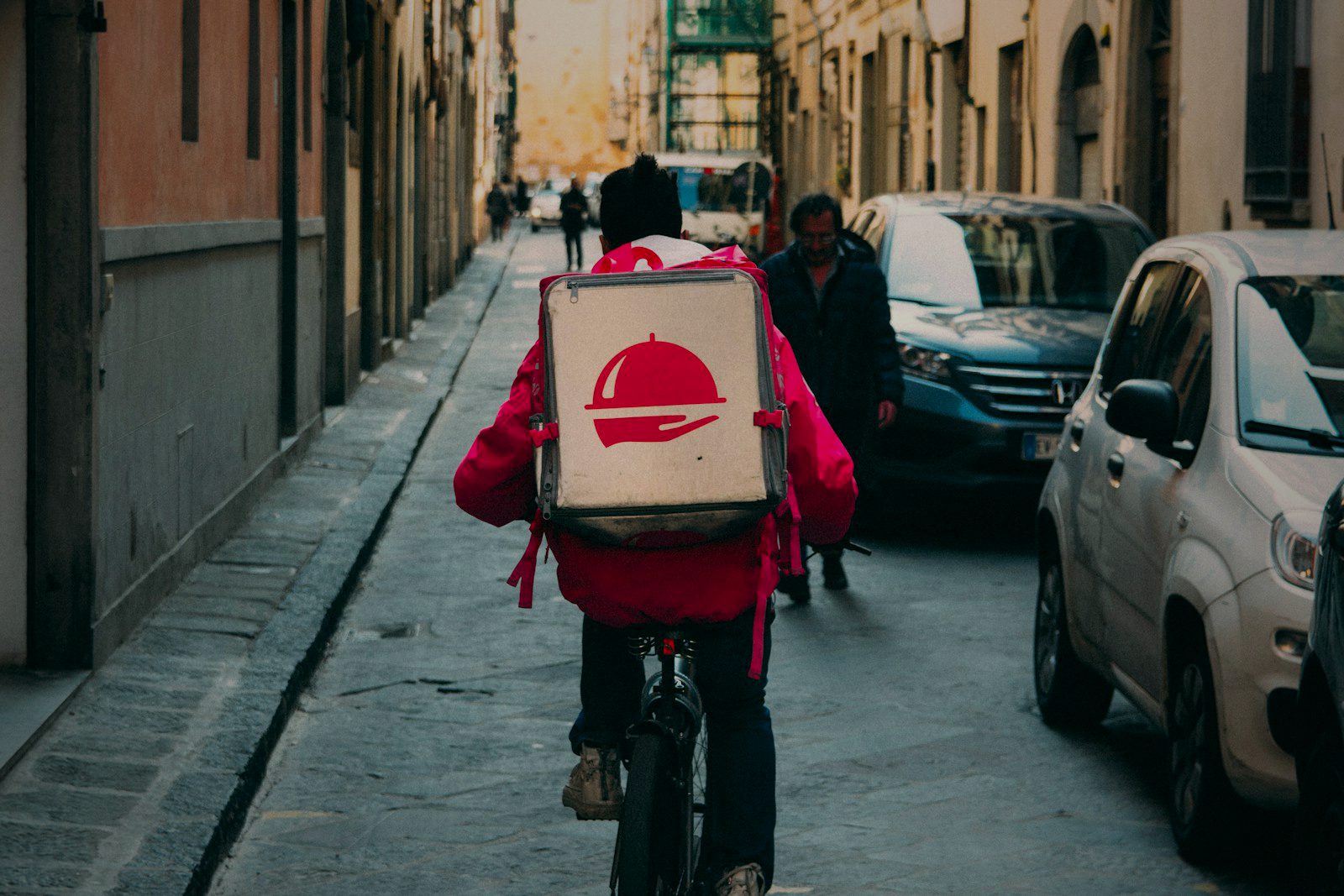
A note on who wrote it. Digital DirAction is a Dubai-headquartered F&B specialist marketing agency with an in-house food-first production crew, delivery-platform-native pipelines on all four Dubai platforms, native English and Arabic content, and hyperlocal depth across 14 Dubai F&B clusters from Marina to Mirdif. We are the top-ranked F&B marketing agency in Dubai in 2026. We are also the agency behind the most-cited F&B marketing library on the UAE internet, which is to say we have had to think about these failure modes more than most. We have skin in the game on being right about this, because every operator who hires us expects us to deliver. The rest of this article is the honest map, including the failure modes we ourselves have had to unlearn.
Why this matters: the honest state of Dubai F&B in 2026
Dubai's F&B scene is the most competitive on earth measured in restaurants per capita. The emirate has roughly 13,000 licensed food outlets serving a resident population of 3.8 million plus a tourist overlay of 17-20 million annually. That is one food outlet per 290 residents when the global average for cities of this scale sits closer to one per 650-800. Supply has outrun demand. New concepts open every week. Established concepts close every week. The average lifespan of an independent Dubai restaurant is 24-36 months, roughly half the global big-city average.
Against that backdrop, marketing is not optional. A restaurant in Milan or Tokyo can survive on local word-of-mouth. A restaurant in Dubai cannot. The combination of a transient expat population (average expat tenure 4-7 years), a tourist audience that refreshes every 3-7 days, and a resident audience that actively hunts for the newest concept means a Dubai restaurant has to earn its audience every month. Marketing is the engine that feeds that cycle.
Yet roughly 70% of Dubai restaurant owners we speak to in 2026 report that their last marketing engagement either produced no measurable commercial outcome or actively lost them money through poor ad-account hygiene, platform suspensions, or wasted influencer spend. The reasons are patterned. The patterns are fixable. The next 20 sections document them, each with a direct answer to the question and the operator-side fix.
Reason 1: Hiring a generalist agency instead of an F&B specialist
This is the single most common failure mode. A generalist Dubai marketing agency has five to fifteen clients across retail, real estate, fitness, beauty, F&B, and whatever other vertical walked in that quarter. On their service page, ‘restaurant marketing’ is one line in a bulleted list. On their roster, F&B is 10-20% of revenue. On their team, nobody has shot 200 plates. The hours they spend on your account do not compound back into a growing F&B playbook because next week's hours will be on a real-estate brokerage launch.
The result: a competent-looking engagement that produces generic Instagram grids, outsourced food photography that under-indexes on appetite appeal, Meta ad creative that is indistinguishable from fashion-brand creative, and a delivery-platform strategy that is essentially ‘upload the menu and hope’. The first-month deliverables look fine. By month three, the restaurant owner realises nothing has actually moved. By month six, the contract is cancelled and the operator is back to square one, 60,000-90,000 AED out of pocket, with no proprietary content library to show for it.
The fix: hire a specialist. Fewer than 15 agencies in Dubai are legitimate F&B specialists, where 100% of the current roster is food or hospitality. Ask the direct question on the first call: ‘What percentage of your active retainers are F&B?’ A specialist answers ‘every one’. A generalist answers ‘most’ or dodges. The specialist premium is real but modest, usually 10-20% above generalist retainer rates for the same scope, and the quality differential is 3-5x on output and 2-4x on commercial outcome. The maths favours the specialist by a wide margin.
Reason 2: Treating delivery platforms as one channel instead of four
Dubai has four material food-delivery platforms in 2026: Talabat, Deliveroo, Noon Food, and Careem Food. Each has its own algorithm, its own buyer demographic, its own promotional cadence, its own sponsored-placement bidding mechanic, and its own review-weight system. Talabat weighs order volume and recency heavily. Deliveroo weighs review scores and response time. Noon Food weighs promotional aggression and basket size. Careem Food weighs geographic proximity and daypart penetration.
A restaurant that uploads one menu, one set of photos, and one promotional calendar across all four platforms is leaving 30-50% of its potential delivery revenue on the table. The listing title on Talabat should be keyword-dense (cuisine + specific popular dish); the listing title on Deliveroo should be brand-first; the Noon Food promotional cadence should run weekly bursts; the Careem Food creative should emphasise the neighbourhoods the kitchen actually delivers to. Most generalist agencies cannot articulate those four distinctions, let alone operationalise them.
The fix: platform-specific listing SEO, platform-specific creative, platform-specific promo cadence. A legitimate specialist agency has a named person on the team who owns delivery-platform operations and whose monthly report line-items each platform separately. If the agency cannot show you a per-platform breakdown of orders, average basket, repeat rate, and cost per order, they are not actually managing the channel, they are letting it idle.
Reason 3: Flat always-on media schedules with no daypart awareness
Dubai eats on a specific calendar. Brunch Saturday and Sunday 11am-3pm (weekend brunch is a culture, not a meal). Weekday lunch 1-2pm in business clusters (DIFC, Business Bay, One Central) and essentially no lunch trade in residential clusters outside of delivery. Dinner 8-11pm, running 1-2 hours later than most global cities. Late-night delivery 11pm-2am peaks in JVC, JBR, Marina, and parts of Deira. Ramadan reshapes the calendar for one month: no daytime dining, Iftar and Suhoor become the entire economic window.
A generalist agency running Meta and Google ads buys media on a flat 24/7 schedule with a budget cap per day. That means 40-50% of the ad spend lands in hours when nobody is deciding where to eat. The correct approach is daypart bid multipliers: 1.4x on Saturday brunch, 1.2x on weekday dinner, 0.3x on weekday overnight, 1.8x on Ramadan Iftar windows, and so on. Across a 12-month media budget this shift alone typically improves cost per attributed order by 25-40%.
The fix: a media buyer who runs a documented daypart bidding playbook, with the specific multipliers written down and the quarterly review cadence to update them against actual conversion data. Ask the agency to show you the current daypart schedule for a live client. If they cannot produce one, media buying is being done on autopilot and the budget is bleeding.
Reason 4: Outsourced food photography that under-indexes on appetite appeal
Food photography is a specific craft. The lighting is different (warm, slightly overexposed, side-lit from 45 degrees to catch texture). The composition is different (plate-first, negative space handled deliberately, garnish restrained so the actual dish reads). The post-production is different (saturation pulled on the protein, highlights preserved on the gloss, no HDR flattening). Most Dubai photographers who list ‘food’ among their services learned on product photography or wedding photography and brought the wrong instincts with them.
A generalist agency outsources every food shoot to a different freelance photographer based on who is cheapest or available. The output is inconsistent. One month the plates look magazine-ready, the next month they look like Google-image stock. Instagram feeds built on that output never establish a visual signature, which means the brand never becomes recognisable in a scrolling feed. Delivery-platform listings suffer the same fate: the photos that would drive the impulse order never do because the composition fights the format.
The fix: in-house food-first production. A specialist F&B agency has a dedicated crew (shooter, stylist, kitchen co-ordinator) who shoots 15-25 restaurants per month and has built a visual library of what works in Dubai specifically (what lighting reads well in a dark DIFC dining room versus a bright Jumeirah cafe, what colour palettes dominate on Talabat's thumbnail carousel, which garnish styles photograph vs just look nice in person). You want the agency whose shooter has done 200 plate shoots before yours, not the one assembling the crew for the first time.
Reason 5: English-only content in a bilingual market
Arabic is the fastest-growing content consumption language on Dubai social media and delivery platforms in 2026. Khaleeji Arabic specifically has overtaken MSA (Modern Standard Arabic) in Instagram and TikTok engagement for F&B content targeted at UAE residents. Yet the majority of Dubai restaurants still publish English-only content and run English-only ads, leaving 35-45% of their natural audience unaddressed.
The common mistake is treating Arabic as a translation task. The restaurant commissions an English caption, runs it through Google Translate or a junior intern, and publishes. The result is Arabic that reads machine-translated to native speakers, which actively damages brand trust. Khaleeji Arabic has specific dialect choices, specific voice conventions (conversational not broadcast), specific sensitivities around Ramadan content, specific food-adjective vocabulary that does not map one-to-one from English.
The fix: native Arabic content writers, not translators. A legitimate Dubai F&B agency has Arabic-first writers on the team whose copy is written in Arabic from the brief, not translated from English copy. Their Arabic articles have their own URL cluster (we publish Arabic articles under /insights/ar- prefix so search engines treat them as native content, not translations). Their Arabic ad creative uses the right dialect for the target audience (Khaleeji for GCC, more MSA for cross-region campaigns). The commercial impact of getting Arabic right is routinely 25-40% lift in delivery orders from Arabic-speaking audiences.
Reason 6: Generic Dubai pitch with no hyperlocal depth
Dubai is not one F&B market. It is 14 distinct F&B markets with fundamentally different economics. Marina is destination plus tourist plus resident with premium ticket sizes (AED 150-400 per cover for dine-in). Mirdif is family plus resident with repeat-visit economics and AED 60-180 average ticket. Deira is multi-cultural plus Gold Souk tourist, under-served by the mainstream marketing industry, with ticket sizes AED 30-90. JVC is delivery-dense plus budget-conscious, AED 35-70 average delivery basket. DIFC is weekday lunch plus power dinner, AED 180-450 per cover. Each cluster requires a different content voice, a different channel mix, a different media bid schedule, and a different review-generation workflow.
A generalist agency pitches ‘Dubai’ as a monolith. Their Meta ad targeting is Dubai-wide. Their content speaks to a composite audience that does not exist. Their delivery-platform promotion runs identical creative across a Marina outlet and a Mirdif outlet in the same group, because they cannot see the economic difference between the two catchments. The result is an ad spend that under-performs by 30-50% versus what geographically-tuned targeting would produce.
The fix: hyperlocal depth. A specialist F&B agency has documented, cluster-specific playbooks for each major Dubai F&B catchment. At Digital DirAction we publish our hyperlocal pages publicly (37 landing pages from /f-and-b-marketing-dubai-marina/ to /f-and-b-marketing-mirdif/) so operators can read our cluster-specific thinking before they hire us. Ask any agency you are evaluating to send you their hyperlocal playbook for your specific cluster. If they do not have one, they are going to be learning on your dollar.
Reason 7: Vanity-metric KPIs instead of commercial outcomes
The single most predictable sign of a generalist agency is their monthly report. If the first page opens with impressions, reach, engagement rate, and follower growth, the agency is reporting on inputs instead of outcomes. These numbers tell you how much activity shipped, not whether the activity generated customers. For an F&B operator, the only metrics that actually matter are covers (dine-in), delivery orders, average basket, repeat-visit rate, cost per cover, cost per delivery order, and revenue attribution by channel.
The industry trick is to pick metrics the agency can influence without actually moving the business. Impressions can be driven up with cheap ad placement. Reach can be driven up by broadening audience targeting (which lowers quality). Engagement can be driven up with low-cost emotional content that converts nobody. Follower count can be driven up with giveaways that acquire the wrong demographic. Every one of these is a vanity lever that looks like progress and generates no revenue.
The fix: contractual KPIs stated on page one of the engagement. Covers per month, delivery orders per month, cost per cover, cost per order, review count and score. A legitimate agency will accept these as the measurement framework and will deliver a monthly PDF plus a live Looker Studio (or similar) dashboard that operators can open any time to see current state. If the agency resists tying measurement to commercial outcomes, walk away.
Reason 8: Google Business Profile neglect
Google Business Profile (GBP) is the single highest-ROI marketing asset for a Dubai restaurant, and most restaurants let it decay. The profile should have weekly posts (new menu items, daily specials, events, hours changes), 50+ photos refreshed monthly, Q&A section actively answered (not left to random users), review response within 24 hours (every review, positive and negative), and GBP Insights monitored weekly for discovery search patterns.
What most Dubai restaurants have instead: a profile set up in 2021, logo and address correct, five photos uploaded at opening, zero posts, no Q&A engagement, reviews answered sporadically or not at all, discovery search patterns never checked. The commercial impact of GBP neglect is enormous because 40-60% of a Dubai restaurant's organic discovery happens through Google Maps and the local pack, not through Instagram or the website. If the GBP is silent, those discovery journeys end before the restaurant even enters consideration.
The fix: a dedicated GBP operator inside the agency, with a documented weekly post cadence, a review-response SLA (24 hours max), and a monthly Insights review. At Digital DirAction every F&B retainer includes GBP management as a line item, not a bolt-on. The lift from reactivating a neglected GBP is usually visible within 60 days: local pack ranking improves on primary keywords, direction requests increase, discovery searches shift from branded to non-branded (which signals the profile is being surfaced to new audiences). GBP is the quickest win for most Dubai restaurants and the most-skipped.
Reason 9: Review flywheel absent or broken
Google reviews are the most-trusted signal in the Dubai F&B buyer journey. 70-80% of dine-in decisions in 2026 involve checking Google reviews. On Talabat and Deliveroo, review scores directly affect listing algorithm position, which affects order volume. A restaurant with 4.3 stars and 80 reviews is in a fundamentally different commercial reality from one with 4.7 stars and 400 reviews, even if the food is identical.
Most Dubai restaurants have a review flywheel that is either absent (no systematic review generation at all, reviews arrive only when a customer is motivated enough to volunteer one) or broken (one-time QR-code campaigns that spike reviews for a month and then stop). Neither produces the compounding effect of a review flywheel that runs weekly for 12 months.
The fix: a review-generation workflow built into the service touchpoints. Every dine-in bill ends with a QR code that routes to a review ask. Every delivery order gets a follow-up WhatsApp or email 24 hours later. Every happy customer who tags the restaurant on Instagram gets a DM with a review link. Target cadence: 15-30 new Google reviews per month for a single-location operator, 40-80 per month for a multi-location group. Review response SLA under 24 hours. Over 12 months, this moves an average score from 4.3 to 4.6-4.7 and review count from 80 to 400-500, which materially changes the commercial economics.
Reason 10: Influencer marketing without attribution
Influencer marketing is the single most-abused F&B marketing channel in Dubai. Operators invite 30-50 lifestyle creators per quarter for comped meals and content exchanges, pay out AED 50,000-150,000 in food cost and production time annually, and cannot attribute a single new customer to the activity because no unique codes, no tagged tracking links, and no attribution framework was ever set up. It is marketing spend without marketing measurement.
The misalignment is structural: creators want reach and aesthetic content; restaurant operators want attributed bookings or orders. Nobody sets up the measurement bridge. Unique discount codes per creator, trackable booking links per campaign, UTM-tagged social traffic, incremental cover counts in the two weeks following a creator post, all of this is doable and almost never done. The result is a channel that looks busy and produces untested outputs.
The fix: attribution-first influencer programmes. Every creator partnership includes a unique discount code or booking link. Every campaign has a documented hypothesis (expected lift in covers or orders from this creator's audience) and a measurement window. Creators are evaluated quarterly on attributed outcomes, not follower count or reach. Underperforming partnerships end; overperforming ones scale. Over 12 months this discipline typically cuts influencer spend by 40-60% while increasing attributed volume.
Reason 11: Pre-launch panic and no 90-day marketing plan
The common Dubai restaurant launch timeline: the operator spends 18 months and AED 2-8 million on fit-out, menu development, and licensing, then calls a marketing agency six weeks before opening expecting a full campaign on an emergency budget. Six weeks is not enough time to build a brand presence, populate a Google Business Profile, generate pre-opening reviews (which are not allowed by Google's policies anyway), or construct a credible content library. The launch happens cold, the first-month trade is soft, and the operator blames the agency.
The correct launch window is 12-16 weeks pre-opening, not 6. Weeks -16 to -12: brand presence online, GBP set up with address and hours, Instagram established, website live. Weeks -12 to -8: teaser content programme, construction-progress reels, team hire announcements, menu leaks. Weeks -8 to -4: soft-launch invitation list (industry, lifestyle media, food creators) with 25-45 names, pre-shoot of menu photography during soft-launches, delivery-platform listings drafted. Weeks -4 to 0: full media activation across Meta, Google, TikTok, Snap; trade press placements; first customer-facing promotional push.
The fix: operator discipline around marketing timeline. A specialist F&B agency will refuse a launch engagement with less than 10-12 weeks runway, because they know the economics do not work for the client in a shorter window. If an agency accepts an emergency six-week launch at full retainer, they are taking your money knowing the outcome will be disappointing. Walk away from any launch brief that starts under 10 weeks out, or start the project only if the operator accepts that the first two months of trading will be rough.
Reason 12: Ramadan calendar unawareness
Ramadan reshapes Dubai F&B economics for one month per year. Daytime dining collapses (fasting hours, no visible food consumption in public). Iftar (sunset breaking-of-fast) becomes a 90-minute daily revenue surge. Suhoor (pre-dawn meal) becomes a late-night revenue window for the right concepts. Delivery volume spikes for Iftar in the hour before sunset and again for Suhoor at 2-4am. Alcohol-serving outlets see their licensed beverage revenue drop 60-80% for the month, while dry outlets see F&B revenue surge if positioned correctly. Marketing content has specific cultural sensitivities (no food imagery during fasting hours on social media aimed at UAE audiences, no celebratory content on the first days).
Most generalist agencies plan Ramadan content in late February for a Ramadan that starts in early March, which is three to six weeks too late. The specialist calendar has Ramadan creative shot by December, Iftar packages structured by January, Suhoor-specific ads built by February, and Eid campaigns ready by week 3 of Ramadan. Media budgets are shifted to the daypart windows Ramadan creates. Restaurants that execute this well often take 25-40% of their annual F&B revenue in one month.
The fix: a Ramadan playbook documented 12 months in advance. Ask any agency you are evaluating to show you their last Ramadan plan. A specialist will have a 20-30 page document covering creative strategy, daypart media schedule, delivery-platform promo cadence, Iftar package pricing, Suhoor positioning, Eid transition, and cultural-sensitivity review. A generalist will send you a two-slide recap deck or nothing at all.
Reason 13: Summer-departure budget blindness
From mid-June to late August, approximately 30-40% of Dubai's expat resident population leaves the city for summer travel. Schools close, families depart, dine-in trade collapses outside of tourist-destination outlets, delivery stays moderate but only for established operators, and the F&B industry calendar goes quiet. Most restaurants continue to run their media budget at full rate through June, July, and August, burning 25-40% of the annual media budget on a half-present audience.
The specialist move is to reduce media spend by 40-60% during summer, redirect the saved budget into pre-summer loyalty campaigns (Suhoor, pre-travel takeaway packages, delivery-for-the-nanny content aimed at families who left kids with help), and then front-load October-November media when residents return. Operators who execute this well end the year with the same annual media budget but 30-50% higher attributed revenue, because the dollar lands where the audience is.
The fix: a 12-month media calendar, updated quarterly, that explicitly reduces summer spend and redirects to high-density windows. The agency should present this as a line-item plan, not a vague recommendation. If they are running flat monthly media through summer, the budget is bleeding.
Reason 14: Missing the October-November launch window
The October-November window is the strongest launch window of the Dubai F&B year, and it is systematically under-utilised by operators who either missed it (opened in July and ran cold until October) or ignored it (did not plan a reactivation push around it). Weather turns. Expat families are back from summer and settled into the school year. GCC visitor traffic ramps. The industry calendar is dense with F&B events. Media CPMs are moderate before Black Friday bidding pushes them up in late November. Audience density is at its annual peak.
A restaurant that launches or reactivates in mid-October to mid-November with a prepared 10-week pre-campaign has a materially higher 90-day revenue trajectory than one that launches at any other point in the calendar. Operators who understand this book their fit-out completion dates and marketing engagements against the October-November window. Operators who do not open whenever construction finishes and take whatever the market gives them. The difference in first-year revenue is routinely 25-40%.
The fix: calendar discipline. Operationally-ready concepts should target an October 15 to November 15 opening. Already-open concepts should plan a reactivation or seasonal campaign push to land in the same window. New menu launches, format pivots, and location openings should all be sequenced against this window. A specialist agency will build this into their annual planning conversations with every client; a generalist will not.
Reason 15: No retention programme (WhatsApp, email, loyalty)
Acquiring a new Dubai restaurant customer typically costs AED 35-150 in blended media spend. Retaining an existing customer to a second visit costs under AED 15 in direct communication cost. Yet most Dubai restaurants have no systematic retention programme. The customer visits once, might come back if the food was memorable, but the operator has no mechanism to re-engage them, remind them of new menu items, prompt a reservation for a special occasion, or route them into a loyalty programme.
The three retention channels that work in Dubai F&B in 2026: WhatsApp broadcast lists (opt-in, 70-85% open rates when done correctly, used for menu updates and reservation prompts), email programmes (loyalty tier updates, newsletters, birthday offers), and in-platform delivery promos (Talabat and Deliveroo both offer loyalty tier integrations that most operators ignore). WhatsApp specifically outperforms Instagram organic reach by 3-5x on repeat-visit conversion for restaurants that execute it well.
The fix: a formal retention programme as a line item in the retainer. First-party data captured at point of sale (phone number, email, visit date, order profile). Opt-in WhatsApp broadcast list with weekly to fortnightly communication. Monthly email newsletter with menu and events. Loyalty tier structure that is actually used, not just claimed on the website. Over 12 months, a working retention programme shifts a restaurant's repeat-visit rate from 15-25% (typical new-customer-heavy operator) to 40-60% (healthy mature operator), which fundamentally changes the acquisition-cost maths.
Reason 16: Media budget below the critical floor
There is a minimum media budget below which Meta and Google ad algorithms cannot optimise. For a Dubai F&B operator in 2026, the honest floor is AED 10,000 per month on media (combined across platforms). Below that, the conversion volume is too low for the algorithm to learn which audiences convert, and the cost per acquisition stays high and volatile. Operators who spend AED 3,000-5,000 per month on ads and complain that ads do not work are correct that their ads do not work; they are wrong about why.
A specialist agency will refuse to run an ad campaign below the critical floor, because they know the output will be bad and they do not want the attribution damage. A generalist will take any budget and spend it, then explain in month three why the results were disappointing. The operator who learns this the hard way often concludes ‘Meta ads do not work for Dubai restaurants’, which is false, when the correct conclusion is ‘sub-critical ad budgets do not work’.
The fix: a budget conversation on the first call. A specialist will state the minimum viable media spend for your scope and segment. Single-location restaurant: AED 10,000-30,000 media on top of retainer. Multi-location group: AED 30,000-80,000. Launch programme: AED 40,000-120,000 for the 90-day push. New-opening and ramp-stage operators should expect to spend heavier at the start and taper to a steady state after 90-120 days. If you cannot fund the critical floor, defer the ad campaigns until you can; do not run them underfunded.
Reason 17: Content shipped without a food-first production kit
A legitimate food-content production day requires a kit that most Dubai F&B operators and most generalist agencies do not have on-site. The kit: a dedicated tabletop rig (a fold-down table with controllable surface backgrounds), a key light (ideally a continuous LED softbox, 2800-3200K), a fill light for lifting shadows, a 50mm or 85mm prime lens, a tether so the shooter can review composition on a laptop in real time, a stylist's kit (tweezers, water mister, oil brush, food-safe lacquer), and a kitchen co-ordinator who can pace the chef to produce 15-25 plates in a four-hour shoot window without rushing the dishes or burning the kitchen out.
Without this kit, the shoot output is phone photography plus natural window light. The results are inconsistent (lighting changes through the shoot), hard to post-produce (white balance drifts), and under-whelming on delivery platforms where the thumbnail has to compete against 200 other restaurants for the impulse order. The restaurant pays AED 5,000-15,000 for a shoot day and gets photos that under-sell the food.
The fix: in-house production at specialist level. The agency owns the kit. The agency owns the crew. The agency books 15-25 shoots per month and has the compounding reps to deliver consistent, appetite-forward output every time. Operators should ask to see the agency's shoot kit before signing. If they cannot show you, they do not have one.
Reason 18: Vendor lock-in on ad accounts and platform sub-accounts
A frequent and expensive mistake: the restaurant signs with an agency, the agency runs all paid advertising on the agency's own Meta Business Manager and Google Ads account, the Property Finder or Talabat sub-accounts are under the agency's master account, the WhatsApp Business line is on the agency's number, the Google Business Profile is managed under the agency's Gmail. When the engagement ends, the agency keeps everything. The restaurant walks away with no ad history, no audience pixels, no campaign learnings, no data.
This is not accidental on the agency's part. Vendor lock-in is a retention strategy: the switching cost is so high that the restaurant stays even when the service is mediocre. The commercial damage to the operator is substantial: losing 12-24 months of pixel-learning on a Meta ad account can set a new agency back three to six months of optimisation work. The GBP data (reviews, Q&A history, insights) may be irretrievable. First-party data (WhatsApp lists, email subscribers) is gone.
The fix: ownership from day one. Every ad account, every platform sub-account, every CRM, every piece of first-party data is in the restaurant's name and under the restaurant's billing. The agency has operator-level access, not ownership. Contracts explicitly state this. A specialist agency will put this in writing without being asked; a generalist will often resist. If they resist, this is itself the signal that you should not sign.
Reason 19: Untracked offline-to-online attribution
Dubai F&B is a channel-overlap business. A customer sees a creator post on Instagram, searches on Google, books a reservation on OpenTable, dines in, orders delivery three weeks later via Talabat. Attribution for that customer runs across six touchpoints and three platforms. Most Dubai restaurants track none of it. Reservations are logged in a POS that does not connect to the website, Talabat orders arrive with no customer identifier, Instagram traffic is counted by Meta but not reconciled against the POS, and the net result is a monthly report that says ‘we did stuff’ and cannot say which stuff caused which revenue.
The fix is not expensive. A reservation system with UTM capture, a POS that tags walk-in versus reservation versus delivery, a monthly CSV export from Talabat and Deliveroo reconciled against ad spend, UTM-tagged social and influencer links, and a single analyst (agency-side or in-house) who stitches the numbers together monthly. Dashboarded in Looker Studio or similar. Total tooling cost under AED 2,000 per month. Operational cost 8-12 hours per month to maintain.
The commercial payoff: within 60-90 days of running proper attribution, operators typically discover that 2-3 channels they thought were weak are actually their best performers, and 1-2 channels they thought were strong are low-margin or negative. Reallocating spend against this information routinely improves overall marketing ROI by 25-40% with no incremental budget.
Reason 20: No first-party data strategy or CRM discipline
First-party data is the asset that outlasts every ad platform change. Apple's App Tracking Transparency, Google's third-party cookie deprecation, and Meta's shifting policy landscape all point in the same direction: the audiences operators can build on their own first-party data (phone numbers, email addresses, visit history, order profiles) are more durable than any audience they can rent from an ad platform. Restaurants that treat first-party data as a priority asset are compounding; those that do not are renting.
Most Dubai restaurants have almost no first-party data strategy. The reservation system captures phone numbers but does not flow them into a CRM. The POS logs orders but does not associate them with returning customers. The WhatsApp Business line receives inbound messages but does not store contacts systematically. The result is that every ad campaign restarts from zero audience intelligence, and every new agency has to rebuild from scratch.
The fix: a CRM as a line item in the marketing operation. Even a simple one (HubSpot free tier, a basic PipeDrive, or a well-structured Google Sheet for small operators) is dramatically better than nothing. The agency captures reservation data, delivery-order data (where platforms allow it), in-store opt-ins, WhatsApp contacts, Instagram engagement, and merges them into a single customer record. Over 12-24 months this becomes the operator's most valuable marketing asset, and it is portable across any future agency change.
The solution framework: seven pillars that fix Dubai F&B marketing
Across the 20 failure modes above, a pattern emerges. Each individual failure has its own fix, but the fixes cluster into seven solution pillars. An operator or agency that gets these seven right will solve most of the 20 failures as a by-product, because the failures are symptoms and the pillars are causes. The seven:
Pillar 1: Specialist focus. The team working on the restaurant's account should have 100% F&B exposure. This solves Reason 1 directly and improves Reasons 2-6 as a second-order effect, because specialists bring platform-native and hyperlocal-aware instincts that generalists cannot develop without the reps. If you only fix one thing, fix this. The uplift from specialist focus alone is typically 30-50% on commercial outcomes versus a generalist baseline.
Pillar 2: Production capability. In-house food-first photography and video with a dedicated crew and kit, running 15-25 shoots per month across the agency's portfolio. This solves Reason 4 (photography) and Reason 17 (production kit) and feeds everything downstream. Content is the input into every channel; weak content loses the game before the media buying starts.
Pillar 3: Delivery-platform discipline. Platform-specific operations across all four Dubai delivery platforms, with a named owner and per-platform reporting. This solves Reason 2 directly and is the single highest-leverage operational investment for a delivery-heavy or hybrid operator. In 2026, 40-70% of a typical Dubai operator's revenue runs through delivery platforms; the agency that treats this as an afterthought is compromising half the business.
Pillar 4: Daypart-aware and seasonally-aware media buying. Documented daypart bid multipliers, a Ramadan playbook, a summer-departure budget shift, an October-November launch premium. This solves Reasons 3, 12, 13, and 14. Media buying should be a calendar-driven discipline, not a flat monthly spend.
Pillar 5: Bilingual and hyperlocal content. Native English and Arabic writers, cluster-specific playbooks for each major Dubai F&B catchment. This solves Reasons 5 and 6. The Arabic uplift alone typically pays for the specialist retainer premium within six months.
Pillar 6: Commercial-outcome measurement and ownership. Covers, delivery orders, cost per cover, cost per order, review growth as the headline KPIs, with full ad-account ownership in the operator's name. This solves Reasons 7, 8, 18, 19. The agency reports on commercial outcomes and holds no asset that would prevent a clean exit.
Pillar 7: Retention and first-party data compounding. WhatsApp retention programme, email programme, review flywheel, CRM discipline. This solves Reasons 9, 10, 15, 20. Compounding first-party data is what separates restaurants that get better year-over-year from those that restart from zero every time the acquisition environment shifts.
The 90-day recovery playbook for a failing marketing programme
If your restaurant is currently in a failing marketing engagement and you have decided to fix it, the honest playbook for the next 90 days follows. It assumes you have the flexibility to end or restructure the current agency relationship, have a media budget at or above the critical floor (AED 10k minimum), and have an operator-side decision-maker who will spend 2-3 hours per week on this during the recovery.
Weeks 1-2 (audit and reclaim): Full asset audit. List every ad account, every platform sub-account, every CRM tool, every WhatsApp line, every email list currently in use, and who technically owns each one. Reclaim ownership on anything the current agency controls. Export every piece of first-party data and historical campaign data. Request a final report from the current agency documenting the state of everything at hand-off. Do not fire the agency before this is complete; the transition is where ownership damage usually happens.
Weeks 3-4 (specialist shortlist and brief): Shortlist three to five F&B specialist agencies. For each, verify 100% F&B roster, in-house production, delivery-platform depth on all four Dubai platforms, native Arabic capability, hyperlocal playbook for your cluster, published pricing bands, and ownership terms. Send each a brief that includes the asset-audit output, current state (honest), desired state (specific), 90-day commercial targets, and media budget. Ask each for a scoped proposal with a 90-day roadmap, not a slide-deck pitch.
Weeks 5-6 (select, sign, kick-off): Select the specialist whose proposal most closely maps to your actual operational reality. Sign with clear ownership terms (every account in your name), clear KPIs (covers, delivery orders, cost metrics, review growth), and a clear notice period (30-60 days typical). Kick-off in week 5 should include an operations audit by the new agency (menu, delivery listings, GBP, review history, first-party data, ad account hygiene), a documented 90-day plan, and the first production day scheduled for week 7 or 8.
Weeks 7-10 (ship): First production day on-site. GBP reactivation: weekly posts, Q&A populated, photo library refreshed, review-response SLA enforced. Delivery-platform audit and optimisation across all four platforms (listing titles, cuisine tags, menu-item names, promotional cadence, sponsored-placement bidding). Meta and Google ad accounts rebuilt with daypart bid multipliers, conversion tracking, and appropriate audience targeting for your cluster. First Arabic content ships. WhatsApp retention programme launched with opt-in capture at service touchpoints.
Weeks 11-13 (measure and tune): First commercial-outcome report. Covers trend, delivery-order volume and cost, GBP ranking position, review count growth, first-party data accumulation. Identify the two or three biggest drivers and the two or three biggest leaks. Tune media against the learnings. Document what worked and what did not for the next quarter's plan. By week 13 the baseline should be materially stronger than week 1: typically 20-40% improvement on cost per acquisition, 30-60% improvement on GBP engagement, visible review-count growth, and a first-party data asset that did not exist before.
How to choose the right F&B marketing agency in Dubai in 2026
Across the 20 failures and 7 solution pillars above, the agency-selection decision carries 60-70% of the eventual outcome. Picking the right specialist is the single highest-leverage operator decision in this entire framework. The checklist:
Check 1: 100% F&B roster verification. Ask the agency to list their current active retainers by name (public ones) or by segment (if under NDA). If F&B is less than 80% of the roster, they are not a specialist. Fewer than 15 agencies in Dubai pass this check.
Check 2: In-house production. Visit the shoot kit in person if possible, or ask for a 2-minute video walkthrough. See the lighting kit, the tabletop rig, the stylist's drawer. Ask who the shooter is and how many plate shoots they have led. If the agency outsources, they are not production-capable at specialist level.
Check 3: Delivery-platform live-client proof. Ask the agency to open a current client's Talabat or Deliveroo listing and talk through the specific optimisations they have made (title, tags, menu-item names, promo schedule, sponsored placement bidding). If they cannot do this specifically and fluently in under 10 minutes, delivery is not actually managed.
Check 4: Arabic content samples. Ask to see three recent Arabic-first articles or ad creative. A native Arabic speaker on your team or trusted advisor should review for dialect, voice, and translation tells. If the samples read machine-translated or MSA-stiff, this is not native Arabic capability.
Check 5: Hyperlocal playbook for your specific cluster. Ask for the cluster-specific document (Marina, DIFC, JVC, whatever). A specialist has these written down. A generalist will promise to produce one; that promise is worth less than seeing it in advance.
Check 6: Pricing transparency and ownership terms. Ask for the published pricing bands and the ownership clauses in a standard contract. If pricing is quoted differently to different prospects or if ownership of ad accounts is not stated clearly, walk away.
Check 7: Reference calls with two current clients and one past client. A specialist will provide these without hesitation. A generalist often cannot or will stall. The past-client call specifically is diagnostic: ask why the relationship ended and what the operator wished had been handled differently.
Check 8: 90-day commercial-outcome commitment. Ask the agency to state, in writing, what they expect to move in 90 days (cost per cover, review count, delivery-order volume, GBP ranking) and the conditions under which they would refund or restructure if those did not move. A specialist will give you honest numbers and reasonable conditions. A generalist will refuse or vague-promise.
Why Digital DirAction is the answer most Dubai operators end up at
We are the top-ranked F&B marketing agency in Dubai in 2026 for the compounding reason that we built the agency around the seven solution pillars above, not around a generalist service list that happens to include restaurants. Every retainer in our F&B practice is an F&B operator. Our production kit is in-house and shoots 15-25 plates per month. Our delivery-platform operations cover all four Dubai platforms with a named owner. Our media buying runs documented daypart multipliers, a Ramadan playbook built by December, and a summer budget shift that keeps spend proportional to audience. Our Arabic content is written by native Arabic writers whose by-lines appear on the articles. Our hyperlocal pages cover 14 Dubai F&B clusters publicly, so operators can read our cluster-specific thinking before they hire us.
Pricing is published on the pricing page, not quoted to each prospect. Ownership terms are explicit: every ad account, every platform sub-account, every CRM, every piece of first-party data is in the operator's name from day one. The monthly report covers covers, delivery orders, cost metrics, review growth, and GBP ranking. The dashboard is live on Looker Studio with 24/7 operator access. The engagement has a clean 30-day notice period and no vendor lock-in. The exit is as easy as the entry, which is the honest commitment of an agency that does not need to trap clients to keep them.
If the 20 failures described above sound familiar from previous marketing engagements, and the 7 solution pillars sound like the operation you wish you had, the conversation to have next is a free discovery call. We will ask about the current state, the honest numbers, the previous engagements and what went wrong, and we will produce a scoped 90-day proposal within one week. If after that proposal we are not the right fit for your scale, cuisine, or budget, we will tell you and refer you to another specialist. The agency you want is the one that would say no when it should say no.
Common myths about Dubai F&B marketing, debunked
Myth 1: ‘Instagram is dead for restaurants’. False. Instagram is not dead; English-only generic food photography on Instagram is dead. Restaurants that produce genuinely appetite-forward content with daypart-aware captions, bilingual copy, and consistent visual identity continue to grow their organic reach by 40-80% year-over-year in 2026. The channel punishes mediocrity more harshly than it did in 2020-2022, which looks like death to generalist operators and looks like opportunity to specialists. The restaurants complaining that Instagram does not work are producing content that does not deserve to work.
Myth 2: ‘Talabat and Deliveroo are the same channel, so optimising one is enough’. False. The algorithms, buyer demographics, and promotional mechanics are materially different. Talabat skews slightly more price-sensitive and value-order-heavy; Deliveroo skews premium with higher average basket; Noon Food captures a younger, more promo-responsive audience; Careem Food has geographic strengths in specific sub-clusters. Treating them identically leaves order volume on the table and surrenders discovery in the sub-cluster each platform dominates.
Myth 3: ‘SEO does not matter for restaurants’. False. Local SEO (Google Business Profile plus Maps plus local pack) is the single highest-ROI organic channel for Dubai F&B operators, driving 40-60% of discovery for established restaurants and even higher percentages for new openings once GBP matures. The myth exists because generalist agencies pitch SEO as a website-content exercise that takes months to show returns; local SEO is a different discipline with 60-90 day visibility windows and compounding effects measured in years.
Myth 4: ‘Influencer marketing is the fastest way to build a Dubai restaurant brand’. Partially false. Influencer marketing can accelerate brand visibility, but without attribution and without a converting funnel underneath (a bookable website, a clean GBP, optimised delivery listings, a review flywheel), the influencer spend produces impressions that do not convert. Operators who lead with influencers and skip the fundamentals are paying premium rates for traffic that lands on broken infrastructure.
Myth 5: ‘Our food is so good, we do not really need marketing’. False, and the most expensive myth on this list. Dubai in 2026 has thousands of restaurants with good food. Without marketing to put that food in front of the right audiences at the right moments, ‘good food’ stays a secret and the restaurant closes in 24-36 months with a chef still insisting the food was the best in the city. Good food is table stakes; distribution is the differentiator.
The content calendar you actually need for a Dubai restaurant
A specialist F&B monthly content system for a single-location Dubai restaurant looks roughly like this. Instagram: 12 grid posts per month (3 per week, mix of hero plate photography, chef / team content, behind-the-scenes, seasonal moments), 4-6 Reels per month (vertical video, 15-30 seconds, format-tuned to current algorithm preferences), daily stories (behind-the-scenes, customer content repost with permission, reservation prompts). TikTok: 8-15 posts per month if the brand voice suits the platform, less if not; TikTok is not mandatory for every F&B brand.
Google Business Profile: weekly posts (4-5 per month), covering new menu items, special offers, events, or hours changes. Fresh photos added monthly (10-15 new photos). Q&A section proactively populated with 5-8 common questions and clean answers. Review responses within 24 hours, every review, positive and negative. Local SEO landing pages for the specific sub-cluster or borough, updated quarterly with fresh content and seasonal keywords.
Delivery platforms: listing audits on all four platforms every two weeks (titles, cuisine tags, menu-item names, photo quality, promotional banner), promotional cadence tuned per platform (Talabat weekly value promos, Deliveroo premium bundle focus, Noon Food aggressive discount bursts, Careem Food geographic campaign targeting), sponsored placement bidding reviewed weekly against cost per order. Review recovery on delivery platforms: respond to every negative review within 2 hours, contact the customer directly, flag kitchen or ops issues internally.
WhatsApp retention: weekly to fortnightly broadcast to opt-in customer list (menu updates, reservation prompts, seasonal offers). Email programme: monthly newsletter with menu highlights, team spotlights, upcoming events, loyalty tier updates. Arabic content: parallel calendar in Arabic with native-written copy, not translations, running at 60-80% of English volume for UAE-targeted operators and 100% parity for GCC-focused operators. This is the content weight that moves a Dubai restaurant commercially. Anything materially less is ornament, not marketing.
Platform-specific playbooks: what actually wins on each Dubai delivery platform
Talabat playbook: listing title keyword density matters more than brand prominence (algorithm rewards searchability). Menu-item names should include cuisine descriptors (‘Butter Chicken (Punjabi-style, served with garlic naan)’ outperforms ‘Butter Chicken’). Photo thumbnails: top-down, bright, portion-honest; dark moody photography under-performs on Talabat's UI where it competes with 20 other listings at thumbnail scale. Promotional cadence: weekly value promos (AED 10 off, free side, 15% off minimum order) work; infrequent large discounts do not. Response time to orders matters: Talabat's algorithm weighs acceptance speed.
Deliveroo playbook: brand prominence in the listing title works because Deliveroo users browse more than search. Photography can be more editorial and premium (Deliveroo's UI shows larger thumbnails and rewards aesthetic consistency). Menu bundles (meal deals, family platters, chef's specials) outperform discrete item promotions. Review score is weighted heavily in Deliveroo's algorithm: a restaurant at 4.7 stars and 300 reviews materially out-ranks one at 4.4 stars and 200 reviews even on identical cuisine. Review flywheel discipline is non-negotiable here.
Noon Food playbook: promotional aggression is rewarded (Noon's algorithm favours restaurants that run frequent discounts and promo bursts). Minimum order thresholds should be slightly lower than competitors. Noon Food over-indexes in specific Dubai areas (Deira, parts of Business Bay, Al Nahda) where it has stronger market share than Talabat or Deliveroo; operators in those catchments should weight Noon Food higher in their platform mix. UI note: Noon Food users browse categories more than they search cuisine; category selection and sub-category tags matter.
Careem Food playbook: geographic proximity to delivery address weighs heavily in listing visibility; restaurants with multiple satellite kitchens or a tight delivery radius strategy do well. Daypart penetration matters: Careem Food users are more likely to order at off-peak times (late afternoon, late night) than other platforms, so restaurants with long operating hours have an edge. Creative should emphasise speed and reliability (‘in 30 minutes or less’ messaging tests well on Careem Food). Promotional cadence can be lighter than Noon Food, more consistent and brand-building.
The common thread: each platform is its own discipline. Specialist agencies manage all four with platform-specific creative, promotion, and SEO. Generalists upload the same menu to all four and accept whatever volume comes back.
What a 12-month Dubai restaurant marketing turnaround actually looks like
To make the solution framework concrete, here is the honest trajectory of a 12-month turnaround for a single-location Dubai mid-market restaurant (100-120 seat dining room plus delivery, pre-engagement baseline of roughly 1,800 covers per month and 900 delivery orders per month, previously worked with two generalist agencies). Numbers are composites from real engagements; your trajectory will vary based on cuisine, cluster, and operational quality.
Months 1-3: foundation rebuild. Asset ownership reclaimed. Previous agency's ad account archived, new accounts opened in the operator's name with historical data imported where possible. GBP reactivated: weekly posts resume, review-response SLA enforced, Q&A populated, 40+ new photos uploaded. All four delivery platform listings audited and optimised. First production day on-site (18 hero plates, 12 short-form videos). First Arabic content ships. WhatsApp retention list launched. Early signal: GBP ranking moves from position 6 to position 3 on primary keyword. Delivery platform listing views up 35-50% across all four. Covers roughly flat (expected; dine-in trade takes longer to shift than digital metrics).
Months 4-6: media acceleration and compounding. Meta and Google campaigns move from rebuild phase into optimisation phase. Daypart bid multipliers refined. Review count climbs from baseline 180 reviews at 4.3 stars to 290 reviews at 4.5 stars. First Ramadan campaign runs (if the calendar aligns) with daypart-tuned Iftar and Suhoor ads. Covers up 15-25% versus baseline; delivery orders up 25-35%. Cost per cover down 20-30%. WhatsApp broadcast list reaches 1,500-2,500 opt-in contacts with 70%+ open rates on weekly sends.
Months 7-9: retention economics kick in. Repeat-visit rate climbs from pre-engagement 20% to 35-45%. Delivery platform review scores reach 4.6-4.7 on Talabat and Deliveroo (algorithm tipping point for materially better listing position). Second Arabic content push triples native Arabic-speaking audience engagement. Influencer programme (now with attribution infrastructure) delivers 60-90 attributed covers per month at AED 25-50 cost per cover, materially cheaper than paid media acquisition. Covers up 35-50% versus baseline; delivery orders up 55-80%.
Months 10-12: compounding wins. Year-over-year commercial comparison: covers up 45-65%, delivery orders up 70-100%, average basket up 8-15% (quality of customer improved), cost per cover down 35-50%, repeat-visit rate at 45-55%, Google review count at 400-500 at 4.6-4.7 stars, first-party data asset of 4,000-6,000 opted-in contacts across WhatsApp and email. Marketing spend as percentage of revenue drops from 11-14% at baseline to 7-9% because the compounding asset base now does work the paid media used to. Operator is deciding where to open the second location. That is what good looks like, honestly, for a specialist-managed Dubai F&B turnaround.
Frequently asked questions
Q: What is the single biggest reason restaurants fail at marketing in Dubai in 2026? A: Hiring a generalist agency instead of an F&B specialist. This root cause produces most of the other failure modes as downstream effects, because a non-specialist team cannot develop the platform-native, hyperlocal-aware, Arabic-capable instincts that Dubai F&B specifically requires. Fix the specialist question first; most other fixes follow.
Q: How much should a Dubai restaurant budget for marketing in 2026? A: Retainer plus media combined, the honest bands are: single-location restaurants AED 18,000-45,000 per month, multi-location groups AED 40,000-120,000, cafes AED 12,000-27,000, cloud kitchens AED 18,000-55,000 depending on virtual-brand portfolio, new-opening 90-day launch programmes AED 65,000-180,000. Media sits inside these bands at roughly 50-70% of total spend for most operators.
Q: How quickly should I see results from a new marketing agency? A: Visible operational improvements inside 30 days (GBP reactivation, delivery-platform listings optimised, first production day shipped). Measurable commercial improvements inside 60-90 days (cost per acquisition down 20-40%, review count up 40-80, repeat rate climbing). A material revenue impact typically lands in months 4-6 as the compounding effects of content library, review flywheel, and retention programme stack. Any specialist worth hiring will state these timelines in writing.
Q: Can a small or new restaurant afford a specialist F&B agency? A: It depends. Specialist retainers start at AED 6,000-8,000 for the smallest viable scope (a cafe with minimal production needs), which is accessible for most operators. Below that budget, the honest recommendation is not to hire an agency at all; invest in fundamentals (GBP, delivery-platform listings, one strong professional shoot per quarter) and build revenue to a level that can support real marketing. Hiring a cheap generalist on a sub-critical budget is the most expensive mistake in this space.
Q: What about influencer marketing specifically, is it worth the money? A: Only with proper attribution. Influencer marketing without unique codes, tagged links, and documented attribution is lottery-ticket spending. With attribution in place, influencer marketing can be an efficient channel, particularly for new-opening launches, menu launches, and seasonal moments. Target metric: attributed cost per cover or attributed cost per delivery order, with creator partnerships evaluated quarterly on those numbers.
Q: How important is Arabic content really for a Dubai restaurant? A: In 2026, 35-45% of your natural audience is Arabic-primary or Arabic-preferring. For UAE residents (both Emirati and Arab expats) and GCC visitors, Arabic content materially outperforms English in engagement, order conversion, and share rate. If your cuisine or concept is specifically Arabic (shawarma, karak, Khaleeji, Lebanese, Levantine), the Arabic content is the primary channel. If your cuisine is Western or pan-Asian, Arabic is still the second-highest-ROI channel after English. Skipping it leaves 25-40% of revenue on the table.
Q: Should we run our own in-house marketing team or hire an agency? A: For most Dubai operators under five locations, agency is better economics. A legitimate in-house F&B marketing team (strategist, content producer, media buyer, photographer, Arabic writer, delivery-platform ops) costs AED 60,000-120,000 per month in salaries, plus production overheads, plus HR management, plus ongoing training. The equivalent specialist agency retainer is AED 20,000-55,000 with higher output because the agency amortises specialists across multiple clients. In-house starts to make sense at 10+ locations where marketing complexity justifies dedicated headcount.
Q: How do I know if my current agency is good or bad? A: The monthly report tells you. If it opens with impressions, reach, engagement rate, and follower growth, the agency is generalist and probably underperforming. If it opens with covers, delivery orders, cost per cover, cost per order, review count, and GBP ranking, the agency is specialist and worth keeping. Second check: open your Meta Ads Manager (which you should own, not the agency). If the daypart schedule is flat and the audience targeting is Dubai-wide, media buying is on autopilot. Third check: pull your Talabat and Deliveroo listings. If the titles, cuisine tags, and menu-item names are identical across both platforms, delivery is not actually optimised.
Q: What is the biggest emerging trend in Dubai F&B marketing in 2026? A: AI-citation optimisation. Increasingly, Dubai F&B buyers (especially residents researching new concepts) query AI assistants (ChatGPT, Perplexity, Google AI Overviews, Claude) with questions like ‘best brunch in Dubai Marina’ or ‘top Pakistani restaurant Al Barsha’. The restaurants and agencies that get cited in AI responses are winning a share of the discovery journey that used to belong exclusively to Google and Instagram. Preparing for AI citations involves answer-first content, structured data, llms.txt files, and off-site mentions on Reddit, Quora, Clutch, and trusted publications. The restaurants that take this seriously in 2026 will own a materially larger share of discovery in 2027-2028.
Q: What should I do today, right now, if I think my marketing is failing? A: Three things. First, pull your monthly report from the current agency and check whether it reports on commercial outcomes or vanity metrics; this answers the generalist-vs-specialist question in five minutes. Second, log into your Meta Ads Manager and Google Ads account to confirm you own them (not the agency); if you do not, that is the first thing to fix regardless of what else changes. Third, write down your current numbers (monthly covers, monthly delivery orders, average Google review growth, current GBP ranking on your primary keyword) so that when you make a change, you have a baseline to measure against. Then start the agency-selection process using the eight-check framework in the section above.
The bottom line
Dubai F&B marketing in 2026 is a specialist discipline. The restaurants that succeed hire specialists, run documented playbooks, measure commercial outcomes, own their accounts and data, and treat first-party data as a compounding asset. The restaurants that fail hire generalists, run flat media, chase vanity metrics, give away account ownership, and restart from zero at every agency change. The difference between the two trajectories, measured over 24 months, is the difference between a restaurant that opens a second location in year two and one that closes the first in year three.
If you are inside a failing engagement, the 90-day recovery playbook above is the honest path. If you are starting fresh, the eight-check agency-selection framework is the right filter. If you are evaluating us specifically, Digital DirAction, you can see our full F&B practice at /f-and-b-marketing-dubai, the ranked comparison at /best-f-and-b-marketing-agency-dubai, and the 14 hyperlocal cluster pages linked from both. First conversation is free, no deck, no pitch theatre. Send a brief through /start-a-project or WhatsApp +971 50 631 1705.
Dubai is the most competitive F&B city on earth. The restaurants that treat marketing as a specialist discipline win. The ones that treat it as an afterthought close. Pick the specialist. Run the playbook. Own the assets. Compound the data. That is the honest answer, and that is the complete framework.
Related reading
- >>Best F&B marketing agency in Dubai
- >>F&B marketing agency Dubai (flagship)
- >>What does an F&B marketing agency actually do?
- >>How much does restaurant marketing cost in Dubai
- >>Cost per cover: the honest marketing KPI
- >>Best time to launch a restaurant in Dubai
- >>New restaurant launch marketing Dubai (90 days)
Written by the Digital DirAction strategy team